


 Email Updates
Learn how to prepare all clinic staff to support MOUD delivery in an accepting, stigma-free environment, from front desk personnel to providers. Ensure providers are equipped with the knowledge and confidence to deliver medications for OUD and engage patients in this treatment. Share these short training videos with your staff.
North Star
All providers in the practice have a current DEA license and choose to prescribe buprenorphine to treat OUD. Practice staff and leadership endorse the organization's decision to treat people with medications for OUD, and they treat these patients with respect and compassion.
Training of all practice staff (including leadership, administrators, providers, and office staff) focuses on reducing stigma and increasing staff understanding of addiction, recovery, and the benefits of using medications to treat OUD.

Clinicwide Orientation to Treating Patients with OUD
At the beginning of implementation, provide training for all staff in the practice. Some practices may encounter hesitation from leadership, providers, pharmacists, front desk staff, or other staff members when implementing medications for opioid use disorder (OUD). This reluctance is often rooted in stigma toward individuals with substance use disorders or in misconceptions about what treatment entails. Building staff buy-in may require intentional efforts to shift organizational culture and promote understanding of OUD as a treatable medical condition. See Identify Champions and a Pre-Implementation Planning Team in the Pre-Implementation Planning section of the Playbook.

Pharmacotherapy Training
Prescribing medications for OUD is the core component of low-threshold care for patients with OUD. Encourage and support providers in your practice to provide buprenorphine, even if other supports and components of OUD treatment are not in place.

Building Your MOUD Practice
Getting started providing medications for OUD is as straightforward as providing medications for diabetes or obesity. Once a provider has a DEA license, the practice is ready to provide medications for OUD. These additional steps serve only to improve your practice’s ability to provide low-threshold, person-centered MOUD care.
For Clinicians
 Obtain DEA license if not held already.
As applicable, determine whether NPs and PAs can prescribe MOUD in your state.
Determine how to support patients during the induction process.
For Staff
Understand signs of overdose. Have naloxone readily available in the office and understand how to use it.
Explore how to obtain naloxone free or at reduced cost for patients.
Have printed materials available to patients that explain OUD, buprenorphine, overdose reversal, and local supports.
For Management
Understand 3rd-party payer requirements for prescribing medications for OUD (e.g., pre-authorization, toxicology screening, same-day billing limitations, in-person visits).
Determine where buprenorphine prescriptions can be filled on the same day they are written.
Identify and form relationships with local and online recovery supports.


The Pre-Implementation Planning Team should hold an initial training to orient all practice or clinic staff, including nonclinical staff, to the nature of OUD and to MOUD as a form of treatment. The goal of this training is to help improve staff's basic understanding of the patients they will serve and the treatment and recovery process. The following items should be key components of this training:
- Explain how addiction affects brain chemistry: Understanding that OUD leads to fundamental changes in the brain can help reinforce that it is a chronic disease, like diabetes. Build an understanding of risk and protective factors and of the kinds of behaviors and challenges common among people living with OUD. Increase the understanding of withdrawal symptoms, compassion for the real discomfort of opioid withdrawal, and how avoiding withdrawal is a key driver to reducing opioid use.
Descriptions from people who were using illicitly-made fentanyl when they started buprenorphine treatment:2
"I know that a lot of times withdrawals are described as flu-like symptoms, and that's true, but it's a lot more than that. There's a really severe mental aspect of it. 'Cause when you have the flu you don't have this crushing anxiety and depression and hopelessness."
"When somebody is thinking of precipitated withdrawal, and they don't know any better, they need to be explained what your body goes through, and how bad it's gonna feel from 1 to 10. I went from 1 to 10 in about a millisecond."
- Teach how to spot the signs and symptoms of OUD: All staff should have a basic understanding of behaviors, side effects, and complications of OUD that patients may present with. They should know and understand the reasons for practice policies and expectations for patient behavior while in treatment.
- Describe the medications for OUD and how they work: Educate staff about MOUD as the first step to a low-threshold, person-centered treatment approach; that MOUD is the standard of care so primary care should plan to provide it. Describe each of the three FDA approved medications—methadone, buprenorphine, and naltrexone—and how and where they are used. Explain why buprenorphine is the preferred medication option in primary care settings. Highlight the value of providing medication as soon as possible after a patient is identified as having an OUD. Explain that it is essential to continue providing care to patients even when they continue to use substances. Emphasize that although a "whole-person" approach with psychosocial supports is ideal, MOUD is associated with greater treatment retention and decreased mortality among people with OUD even if no other services are available.3,4
- Explain how buprenorphine is used to treat OUD: Describe the effect of buprenorphine on the mu opioid receptors in the brain, known as their mechanisms of action. Describe the various forms of buprenorphine, including the longer-acting injectable forms, and how the oral forms are often combined with naloxone. Note that higher dosages of buprenorphine may be required for those who have been using high potency synthetic opioids like fentanyl. Use visual aids and handouts to reinforce these concepts.
- Explain how naloxone can reverse overdose: Stress that naloxone should be provided along with any prescription for opioids and with buprenorphine for patients with OUD. If possible, also provide naloxone to family and close friends. It is preferable to physically give them the medication since prescriptions often go unfilled. For more information see Mitigating Overdose Risk.
- Highlight the effectiveness of MOUD: Teach staff about the positive impact MOUD can have on patient's lives. Show them the research demonstrating that MOUD can decrease mortality, reduce opioid use, and increase retention in treatment. Acknowledge that no one approach works for everyone and that it is critical to adapt the approach to the individual patient's needs and preferences. Also, emphasize that, while recovery is an achievable goal, it will take time. As with any chronic disease, recurrence of use is common and is not a sign of failure but rather the need to adjust the patient's treatment plan.
"I would encourage all physicians and nurses to seize the opportunity to save a life in this way.
It is why we chose our noble professions in the first place."5
- Highlight the local context: Gather local county and state data to help contextualize the opioid epidemic in your community. Use these data in training with all staff to start a discussion about the importance of offering medications for OUD.
- Prepare staff to speak to patients and families about medications to treat OUD: Front desk staff and other providers may receive questions or field concerns from other patients or members of the community about MOUD. Provide tips and talking points for staff so they know how to discuss the medications and describe your practice's approach to treatment. This approach can help create a common understanding about what you are and are not doing as a practice, while dispelling some myths about medications for OUD and individuals with SUDs. (Of note, talking about myths can reinforce the myths instead of combatting them.)6-8
Hear from a family physician who treats OUD in his small primary care practice.
Stigma against people with OUD and against treating OUD with medications is a treatment barrier both within the community and the healthcare system.9,10 This stigma can discourage individuals from seeking treatment for fear it may jeopardize their employment or harm their social relationships.11 The criminalization of drug use further reinforces negative perceptions of people with OUD.12 Finally, individuals who belong to marginalized groups (e.g., based on race/ethnicity, socioeconomic status, or mental health conditions) may experience the stigma even more strongly.13
Stigma is common among healthcare providers as well, to the detriment of patients with SUD. The medical viewpoint of substance use disorders as a chronic disease has been a part of clinical guidelines for more than a decade,14 yet some providers hold onto negative and judgmental stereotypes. Consider the following:
- Misconceptions about the use and effectiveness of medications for OUD can make some providers reluctant to prescribe it.15
- One survey of primary care physicians found that one-third did not perceive OUD medication treatment to be more effective than non-medication (i.e., drug-free) treatment or safe for long-term use.16
- Provider stigma can negatively affect patient care and outcomes. For example, primary care providers who hold greater stigmatizing attitudes were less likely to prescribe medications for OUD or support policies to increase access to these medications.17
To mitigate these barriers, it is crucial to educate all staff about the science of addiction, OUD, and medications for OUD, even those who will not be working directly with patients who are receiving the medications. Stigma is often driven by fear or misunderstanding. Education should focus on facts and compassion and should not be used to embarrass staff.
Trainings to reduce stigma among healthcare providers can contribute to improving the quality of care for patients with SUDs. These trainings often include educational components that address the root causes of stigma, such as misconceptions about addiction and biases against people who use substances.18 The following strategies may help convince staff:
Testimonials and Interaction: Interactive elements, such as role-playing and direct interactions with individuals who have lived experience with substance use, are also effective in reducing stigma.19 Sharing personal experiences and real-world success stories can be a powerful tool to humanize individuals with OUD and show that recovery is possible. Exposure to and stories about people in recovery can help overcome these inaccurate negative beliefs. Invite individuals in recovery who have received medications for OUD or their families to speak with practice staff. Your staff may also be willing to speak about their own personal or professional experience with OUD. If you are interested in hearing more success stories and examples, visit PCSS to learn how primary care providers are making a difference with MOUD treatment. For example, one nurse said,
"Buprenorphine treatment for individuals, who want recovery, means freedom from the enslaving clutches of addiction. Ask anyone who has been there. Addiction is a full time [sic] job. My patients describe it as a vicious cycle of getting money to get drugs, to avoid the agony of withdrawal. Anyone who wants to get their life back should be able to find hope from those of us who have dedicated our professional lives to saving the lives of others."5Two patients have said,20
"Not only has [buprenorphine] given me another chance at life, it has given my kids their daddy back!"
"After 2 days of being on Suboxone® I laughed. I could not believe that I had laughed and meant it. I felt it, I was living again. I began feeling all sorts of feelings. I felt like I was myself again."
- Facts and Figures: It may be necessary to explain to staff the importance of treating people with MOUD. For some staff, presenting information will help convince them of the need. Presenting state- and county-level statistics about the opioid epidemic can help contextualize and localize the issue. Highlighting the treatment gap and the lack of providers of medications for OUD may help encourage some to treat people with medications for OUD. Others who are skeptical of medications for OUD may need to understand that medications for OUD is an evidence-based practice that has been shown to improve patient outcomes.21
Multi-component interventions that combine education, training, and structural changes within healthcare settings have shown to be particularly effective.22 Other interventions that combined education, training, and in-person contact with people in recovery have been shown to enhance provider-client interaction.23 These trainings not only improve provider attitudes but also enhance patient outcomes by fostering a more supportive and non-judgmental healthcare environment.24-27
Your ability to engage patients in treatment and keep them involved in care depends on providing a welcoming environment. Positive staff interactions with patients can help create a supportive practice environment and promote engagement and retention in treatment, reducing the risk of continued substance use, overdose, and death.28 Engaging patients in prevention, diagnosis, and treatment (including medications) for OUD is the first step. All aspects of whole-person care, including psychosocial support and additional services, can be realized once those are in place.
Train all staff, including front office staff, on how to interact with patients in a respectful and positive manner, as many patients are sensitive to being stigmatized for using drugs. During these trainings, ask staff how they would respond to hypothetical scenarios or use role play to demonstrate appropriate responses. Allow staff to ask any questions they may have and to share their concerns.29,30
As described in the previous section, Confront Stigma as a Barrier to Care, patients can quickly perceive judgmental attitudes or behaviors from staff, even if they are unintentional. Individuals with OUD often experience intense guilt or shame, so staff should be careful not to reinforce these feelings.
Incorporating motivational interviewing31,32 techniques can help providers develop more empathetic communication skills.19 Free or low-cost training in motivational interviewing and basic behavior change techniques can help you conduct more successful medication management visits. Motivational interviewing helps providers and staff understand what really matters to the patients, why they are in treatment, and how they define success.
In practices with a more comprehensive array of services for people with OUD, staff should be trained on how to assess patient needs and enhance patient motivation. Customer service techniques can embed motivational interviewing principles, such as:33
- Treating patients with OUD with the same respect as you treat other patients;
- Asking open-ended questions to discuss the situation with the patient;
- Focusing on the patient's reasons for seeking treatment;
- Expressing empathy and compassion;
- Using reflective listening to summarize what you have just heard;
- Asking patients their preferences for in-person vs. telehealth visits and any anticipated issues with maintaining scheduled appointments; and
- Giving patients an opportunity to ask questions.
Training to Support Medication Management Visits: Motivational interviewing techniques can be used during initial clinical assessments and ongoing medication management visits to develop a treatment plan that meets patients' needs. To encourage retention in treatment, ask patients what might lead them to discontinue treatment and what you can do to help ensure they attend their scheduled visits. To learn more, see Resources.
You can prescribe buprenorphine and treat patients with OUD even if mental health services are not available.
The primary focus of low-threshold treatment is stabilizing patients with medication first, with the goal of keeping them alive. Some patients may engage in supportive services as they progress in their recovery.34 In addition, while counseling is associated with MOUD continuation,39 not all patients require intensive counseling or psychosocial supports to meet treatment goals and work toward recovery.
Over 60% of people with OUD have had some form of mental illness in the past year, including 27% who have a serious mental illness.35 Depending on whether and how your practice has integrated mental health services, you may need to rely on external collaborators to address mental health needs. Familiarize staff with your referral partners, keeping in mind that some of these services may be provided through telehealth or smart phone-based apps as well as in the local community as described in Counseling and Other Psychosocial Supports. Just giving the patient a list of resources is unlikely to result in solutions to the problems they face. It is best if you can develop an ongoing collaboration with these service organizations, with closed loop referrals and ongoing communication about patient progress, with appropriate patient consent. Discuss the types of supports that are available such as:
- Drug and alcohol counseling;
- Mental health counseling and therapy;
- Support groups such as Alcoholics Anonymous, Narcotics Anonymous, and Self-Management and Recovery Training [SMART] Recovery. (Know that some of these recovery groups may have a strong bias toward medication-free recovery and will not be appropriate for patients receiving MOUD, as they will not support this treatment approach);
- Peer providers such as certified peer specialists, peer support specialists, and recovery coaches. (As with support groups, peer providers should be vetted first for whether they support MOUD); and
- Help with health-related social needs, such as safe housing, employment, transportation, and childcare. (These may need to be addressed to maximize their chance of recovery.36 FindHelp.org is a national resource that lists organizations that can assist with food, housing, transportation, childcare, etc).
To successfully support their patients with OUD and respond to patient needs, care teams need to be attuned to the lifestyle and social factors that may affect treatment outcomes. They should be familiar with the available services and supports and trained on how to assess patients' needs and be prepared to respond to them.
Addressing challenging behaviors: As with any patient, staff may encounter patients with OUD that present challenging behaviors, so staff should be prepared to respond. Try to discuss this topic without reinforcing stigma. Dr. Nora Volkow, Director of the National Institute on Drug Abuse (NIDA), talks about the way opioids "hijack the brain" and can lead to harmful and socially unacceptable behaviors.37 Recognizing this phenomenon, develop and train staff on approaches that reward positive behaviors and discourage problematic behaviors. (See Challenging Patient Behaviors and Concerns). Train staff on these policies and use role play scenarios to help them practice their responses.
Train staff on procedures to detect and Reduce Risks of Diversion. Diversion is when patients give or sell their medication (buprenorphine, in this case) to another individual. This is an issue that has been controversial and that has been studied extensively. Some researchers have found that sharing buprenorphine may even have positive public health effects by reducing overdoses for people with OUD who are not yet in treatment. The availability of LAI buprenorphine can also essentially eliminate the risk of diversion.38
After determining your practice's approach to treating OUD, train staff on new or revised procedures and workflows before they are implemented. Emphasize how these changes affect staff roles and responsibilities. Diagrams or flowcharts can help staff visualize these changes.
Give staff time to digest and understand these changes on their own and then provide an opportunity for staff to share their questions or concerns in a group setting. Demonstrate the new activity, and have staff practice it themselves. Staff who feel comfortable after being trained on the new workflows can help teach or support others in the practice. The section General Operations provides information on what will need to be developed.
Buprenorphine is a controlled (Schedule III) medication that can be prescribed by any provider with a U.S. Drug Enforcement Administration (DEA) license. To prescribe controlled substances in the U.S., providers need a DEA license or "DEA Controlled Substances Registration,"1 which most providers already have. Those who do not can register with the DEA and apply for a DEA license without special training.2 Non-physician prescribers, such as nurse practitioners and physician assistants, only need a DEA license to prescribe buprenorphine for OUD in most states. State-specific restrictions on non-physician MOUD provision are mostly due to scope-of-practice laws and requirements for additional supervision. More restrictive states include Kentucky, Missouri, Ohio, Tennessee, and West Virginia.3 Non-physicians should review and comply with any state-specific regulations pertaining to prescribing medications for OUD.
The Consolidated Appropriations Act (CAA) of 2023 was created to expand access to medications for OUD. Under CAA, the Medication Access and Training Expansion (MATE) Act mandates that providers who prescribe controlled substances (Schedules III-V) must complete one eight-hour training course in SUD treatment when they renew their DEA license or obtain their first DEA license. The CAA Mainstreaming Addiction Treatment (MAT) Act discontinued the need for providers to obtain an X-waiver to prescribe buprenorphine.
The Substance Abuse and Mental Health Services Administration (SAMHSA) and other federal partners have been promoting comprehensive SUD education for all health professions.4 DEA registrations must be renewed every three years, at which time the prescriber must have completed eight hours of training on OUD or other SUDs or become board certified in addiction medicine or addiction psychiatry.
The package inserts and various free training programs on buprenorphine include information on appropriate dosing. However, those dosing guidelines may have predated the emergence of fentanyl in the street drug supply. Patients who have been using fentanyl regularly may benefit from higher doses than recommended in some of the clinical guidelines. This emphasizes the importance of taking a person-centered approach to dosing5-7 and recognizing that a higher dosage level may be appropriate. Recent research8-11 also indicates that higher buprenorphine doses may be associated with longer retention in treatment.
Illicitly manufactured fentanyl often contains other drugs, typically unbeknownst to the person taking it. The prevalence of specific adulterants varies over time and by geographic area of the U.S. Common adulterants, aside from fentanyl analogs and precursors, include other opioids (heroin and tramadol), xylazine, methamphetamine, cocaine, acetaminophen, and diphenhydramine 12,13 and most recently carfentanil25 and medetomidine.14 Encourage your patients to protect themselves by using fentanyl test strips and Xylazine Test Strips: Quick Detection for Drug Safety. The evolving drug supply can be monitored regionally on sites such as National Drug Early Warning System (NDEWS) | National Institute on Drug Abuse (NIDA).
This is in addition to the fact that people who use opioids often use other drugs, such as cocaine, alcohol, benzodiazepines, and methamphetamine. Among people with an opioid use disorder, 60% had a current comorbid SUD and 72% had a comorbid lifetime SUD.15
The patient's clinical presentation will vary based on what substances are in their system. This is complicated by the fact that which drugs and the dose of the drug(s) used is often unknown to you and to the patient. Buprenorphine does not reduce the physiological dependence, withdrawal symptoms or craving associated with discontinuing other addictive non-opioid drugs. This unknown can make starting buprenorphine more challenging in an outpatient setting,16
Buprenorphine, a partial opioid agonist, is likely to be the medication you will prescribe most frequently. However, it is important to be familiar with the other medications approved for the treatment of OUD.
Long-acting injectable naltrexone (full opioid antagonist):17 A DEA license is not required to prescribe LAI naltrexone to treat OUD, as it is not a controlled substance. Naltrexone blocks the mu opioid receptors in the brain and therefore blocks the "high" or euphoric effects of opioids. Given this medication's high affinity (competitive binding) for mu opioid receptors, administration to a person who has recently ingested opioids will induce withdrawal. Naltrexone is also available in an oral formulation that is used to treat alcohol use disorder, but the oral form is not used to treat OUD.
Long-acting injectable naltrexone17 blocks the opioid "high" (i.e., rewarding effects) and can reduce cravings. However, it is more difficult to begin, as the patient must be completely abstinent from opioids. If the patient is in earlier stages of opioid withdrawal, administration of naltrexone may intensify withdrawal symptoms. The challenges with starting LAI naltrexone and the increased probability of early treatment exit have been associated with higher OD rates in some studies.18 Other studies indicate it can be a preferred treatment for certain groups of patients.19 While the Playbook focuses primarily on buprenorphine, you can learn more about treating OUD with naltrexone in SAMHSA's TIP 63: Medications for Opioid Use Disorder | SAMHSA. Just be aware that this resource was published in July 2021 prior to some policy changes. (See “Quarterly Reviews and Evolution of the MOUD Landscape” on the MOUD Playbook homepage).
Methadone (full opioid agonist): Methadone is a full opioid agonist that fully binds to mu opioid receptors in the brain, which activates the receptors and helps reduce withdrawal symptoms. Methadone is a Schedule II controlled medication. Schedule II controlled medications are "defined as drugs with a high potential for abuse, with use potentially leading to severe psychological or physical dependence."20 Methadone cannot be prescribed or administered by primary care practices for the treatment of OUD.
Opioid-Treatment Programs: Only SAMHSA-certified OTPs are authorized to treat OUD with methadone,21 as it is a Schedule II controlled substance subject to strict federal regulations. OTPs are also able to treat with buprenorphine and naltrexone. OTPs are federally certified and accredited entities that provide comprehensive services for individuals with OUD.21 They treat opioid withdrawal and stabilize individuals with OUD. Many OTPs also offer medical care and non-pharmacological behavioral health services such as counseling and other interventions, peer support, care management, and referrals to community recovery organizations where patients can find additional recovery supports. Without specific regulatory approval, methadone must be administered directly to patients by an OTP, rather than being dispensed at a pharmacy. Since OTPs are specialty substance use treatment programs with a multidisciplinary team of healthcare professionals, they may be an appropriate referral option for your patients who need more intensive treatment.
Be Familiar with Overdose Reversal Medication: It is essential to be prepared to address potential overdose situations. While medications like buprenorphine and methadone can help manage OUD, individuals with OUD remain at risk for overdose, particularly in the early stages of treatment or during recurrence of use (relapse). Therefore, it is important to familiarize yourself with overdose reversal medication, such as naloxone, which can save lives in an emergency.
Naloxone (full opioid antagonist, common brand name Narcan)22 is a standalone medication that rapidly reverses overdose symptoms. This life-saving medication can be purchased, carried, and administered by anyone in case of emergency. Naloxone is available without a prescription over the counter and online as a nasal spray or injection. A helpful approach is to encourage anyone with an OUD and their family to carry naloxone with them, regardless of whether they receive medications for OUD. If possible, provide your patients with naloxone when you first detect their OUD. Multiple forms of overdose reversal agents are available. Be aware of the differences (PDF - 423 KB) so you can select the most appropriate agent.24
In the implementation planning process, you will determine the level of care that suits your practice, the simplest of which is providing maintenance MOUD treatment. Patients receiving MOUD maintenance may have been receiving medications and other treatment at a specialty clinic such as a residential treatment program, an OTP, or other higher level of addiction care. They may be progressing well in their recovery and are ready to transition to a lower level of care. Alternatively, patients may have started buprenorphine in another setting, such as an ED or carceral setting, then been referred to you for maintenance. Primary care clinics have the advantage of being able to provide routine medical care that may not be available in the specialty setting.
You may choose to begin providing MOUD treatment by starting patients on buprenorphine. As you gain experience with MOUD treatment, you may choose to adjust the services and level of care you provide. Whatever services you provide, some patients with OUD will need to be referred to a higher level of care, such as a specialized SUD treatment setting, to meet more complex treatment needs. Depending on their needs, they could be referred to an OTP or an intensive outpatient, partial hospitalization, or residential treatment program.
The State of Vermont developed a hub and spoke model, which builds on collaboration between office-based opioid treatment providers and OTPs. The concept of the hub and spoke system is that patients who need a higher intensity of care may be referred to the OTP or "hub" while patients who have less complex treatment needs may receive care in office-based clinic settings or "spokes". The model emphasizes care coordination between care settings, recognizing that the hub OTP staff are specialists in substance use treatment. Hub staff serve as consultants to the spoke clinic team, and responsibility for patient care may shift back and forth between hub and spoke as needed. For example, initial medication induction might be conducted by the hub OTP, and then the patient could be transferred to the spoke clinic for ongoing management.
You might investigate whether a hub and spoke model is possible in your area. As of 2022, there are approximately 1,900 OTPs in the U.S., including DC, Puerto Rico, and the Virgin Islands, covering every state except for Wyoming.23 To find an OTP near you, search Find Help and Treatment for Mental Health, Drug, Alcohol Issues | SAMHSA. Learn more about the hub and spoke model at Vermont.gov (PDF - 855 KB).

Training Videos
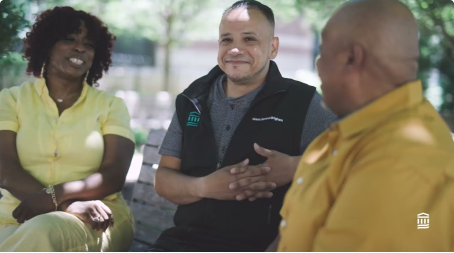
General introduction to buprenorphine for OUD presented by physicians and the recovery care team:
Treat Opioid Use Disorder with Buprenorphine | Mass General Brigham (Source: Mass General Brigham hospital, 2024; 2:45 min.)

Physician describes overcoming his initial reluctance to prescribe buprenorphine for OUD:
What would you say to a provider who is hesitant to prescribe Medications for Opioid Use Disorder? (Source: VHA, 2021; 1:47 min.)
Physician describes his first experience prescribing buprenorphine for OUD:
Will you share your first experience treating a patient with buprenorphine? (Source: VHA, 2021; 2:37 min.)
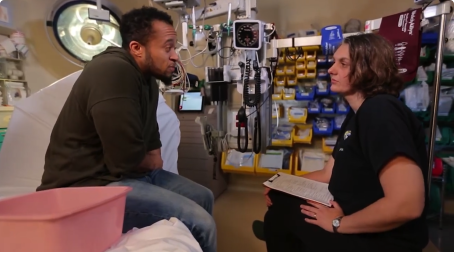
Physician starting patient in heroin withdrawal on buprenorphine:
This doctor–patient vignette applies to primary care even though it is set in an ED. (Source: NIDA, 2018; 3:09 min.)
 .
."When we first started doing this work, stigma was [the] #1 [barrier]. It's still #1. It's the number one reason why a clinic or a provider starts or doesn't start… Every medical school [in the state] is now training the medical students on substance use disorders, particularly OUD and buprenorphine… then they show up at residency, and they're like, why are we not doing this?"
— Subject Matter Expert